5 min read
A short guide to lime plaster
Why we keep coming back to one of the oldest finishes there is, and what to know before you use it in your own home.
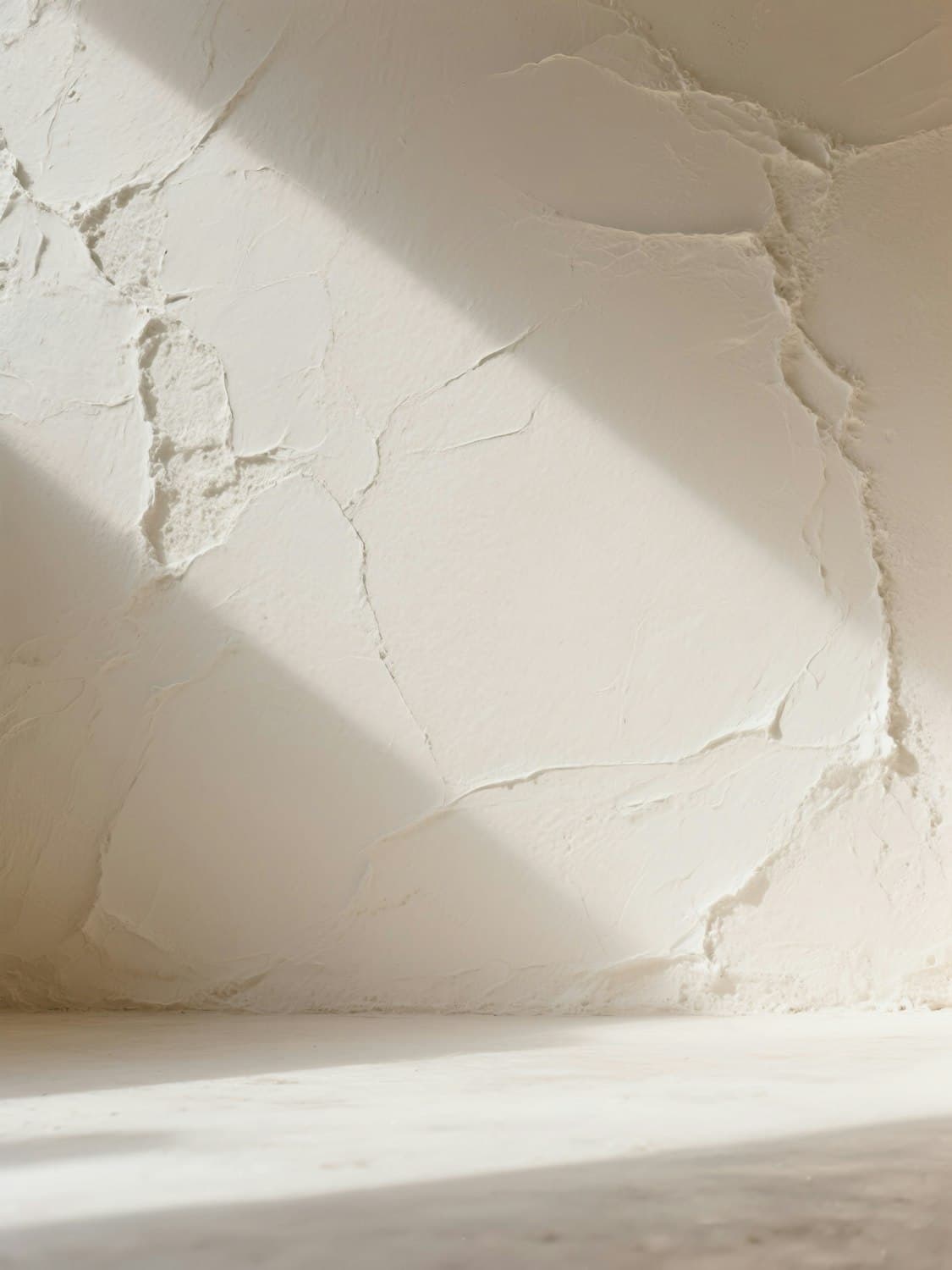
Of all the materials we specify, lime plaster is the one clients ask about most. It is also the one they tend to touch first when they walk into a finished room. It has a softness that paint cannot imitate: a slight variation in tone, and a surface that catches light rather than reflecting it.
What it is
Lime plaster is made from limestone that has been burned, slaked with water and mixed with sand or marble dust. Applied by hand in thin layers, it slowly hardens by absorbing carbon dioxide from the air, turning back into a kind of stone on the wall. It has been used across the Mediterranean for thousands of years, and much of it is still standing.
Why we use it
- It breathes. Lime lets moisture pass through the wall, which matters enormously in old stone buildings that were never designed to be sealed.
- It ages well. Small marks and cracks become part of its character, and repairs blend in rather than standing out.
- It is calm. The subtle movement in the surface gives a room depth without adding pattern or colour.
What to know before you choose it
Lime takes longer to apply than gypsum plaster and needs a skilled hand, so it costs more. It also takes weeks to cure fully, which affects the building programme. In kitchens and bathrooms we protect it with a natural soap or wax finish, and in the busiest corridors we sometimes suggest a tougher base coat.
For most rooms, though, we have found nothing better. A wall finished in lime looks as good in twenty years as it did on the day it was done, and often better.