8 min read
Restoring an apartment on Rua das Flores
Notes from eighteen months inside a Pombaline building in Chiado: what we kept, what we repaired and what we were glad to remove.
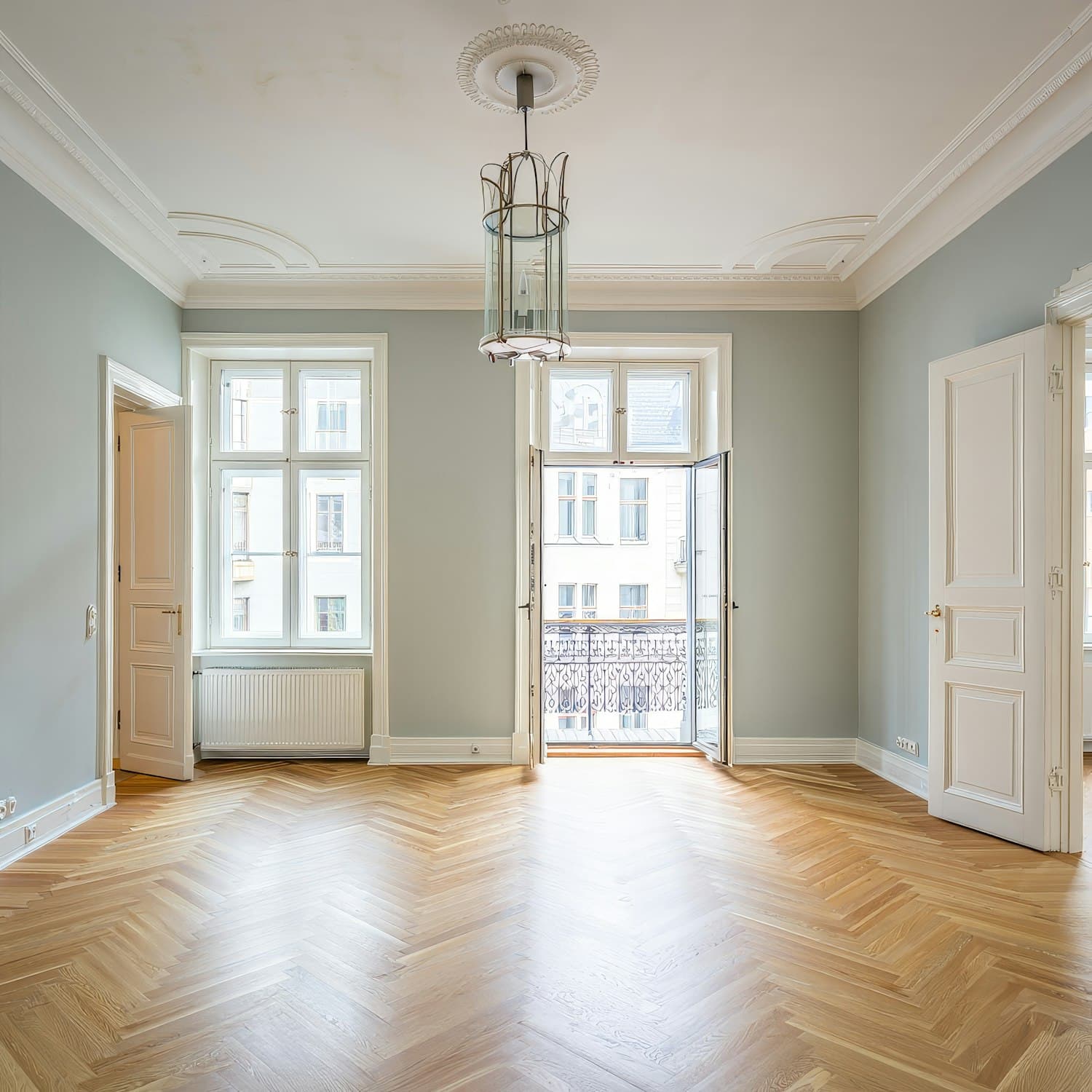
When we first climbed the stairs at Rua das Flores, the apartment had been empty for eleven years. Pigeons lived in the back bedroom, and two later partition walls had cut the long front room into a warren of small spaces. Underneath it all was one of the best-preserved Pombaline interiors we had ever seen.
What we kept
Almost everything original. The herringbone floors were lifted, numbered, repaired and relaid. The interior shutters were stripped of eight layers of paint and rehung on their original hinges. The cornices were cleaned and patched with lime, by hand, over six weeks.
What we repaired
The gaiola, the timber frame inside the walls that gives Pombaline buildings their resistance to earthquakes, had been cut in two places to make room for pipes. Working with a structural engineer, we replaced the damaged sections in matching timber and moved every service into new, dedicated routes.
The best compliment we received came from a neighbour, who asked what had changed.
What we removed
The partitions came out first, restoring the full length of the front room and its tall windows. We also removed a 1970s kitchen, a suspended ceiling in the hallway and a great deal of cement render that had been trapping moisture in the walls.
What we added
A new kitchen in painted oak and Estremoz marble, two bathrooms lined in lime and handmade tiles, and a heating system discreet enough that most visitors never notice it. Everything new was designed to be removable, so that the next restoration, in another hundred years or so, will be a little easier.